Gas Fireplace Inspection in Fairfax, VA

If you rely on a gas fireplace for quick, clean heat in Fairfax, Virginia, an annual gas fireplace inspection isn’t optional. It’s the foundation of safe, efficient performance all season long. ABD Air Duct and Vent Cleaning combines the inspection with gas fireplace cleaning in one gas fireplace service appointment, so your fireplace lights reliably, looks great, and operates safely before the first cold snap.
Book Our Service
From a customer in Fairfax
★★★★★

“Roni came to perform air duct and dryer vent cleaning service. He also did inspect our gas firepace and Alex was also very helpful with scheduling as well. Highly recommend using them if you are in Fairfax area.”

Fairfax customer, Google review, September 2025

Gas Fireplace Service and Cleaning by ABD Air Duct and Vent Cleaning

One Visit for a Complete, Documented Gas Fireplace Checkup in Fairfax

Code-Aligned Checklists, Leak Detection, and Cosmetic Cleaning for Fairfax, Oakton, and Vienna Homes

ABD works from code-aligned checklists, runs leak detection at every accessible connection, cleans the glass, logs, and interior, and hands you honest, documented findings, backed by free estimates and hundreds of five-star Google reviews.

A modern gas fireplace feels “set and forget,” but it still depends on a precise fuel and air balance, clean ignition components, a steady gas supply, and sealed venting. Over a season, dust, pet hair, insects, and soot-like deposits interfere with flame quality and sensors, and gaskets and connections age. Gas fireplaces need a yearly checkup just like furnaces, water heaters, and other gas appliances, and experts recommend a gas fireplace inspection at least once a year. Booking that visit before the heating season is the easy way to stay ahead of it, and regular cleaning between visits keeps dust from building up on the glass and burner.

Gas Fireplace Inspection Fairfax Virginia

What's Included in a Gas Fireplace Service Visit in Fairfax, VA

Gas Leak Detection, Pressure Checks, and Ignition System Testing

Targeted Leak Detection at Every Accessible Joint, Union, and Valve, Plus Pilot and Thermocouple Diagnostics

The inspection starts before anything is lit. ABD verifies gas shutoff accessibility and appliance labeling, recommends a test of the carbon monoxide alarms nearby, and confirms the correct fuel type (natural gas or propane), orifice sizing, and pressure ratings. Then comes targeted leak detection at every exposed gas connection, flex line, gas valve, and union, plus pressure checks where applicable. Gas leaks are rare on a well-kept natural gas line, but small gas leaks at an aging fitting are the one thing you never want to find by accident.

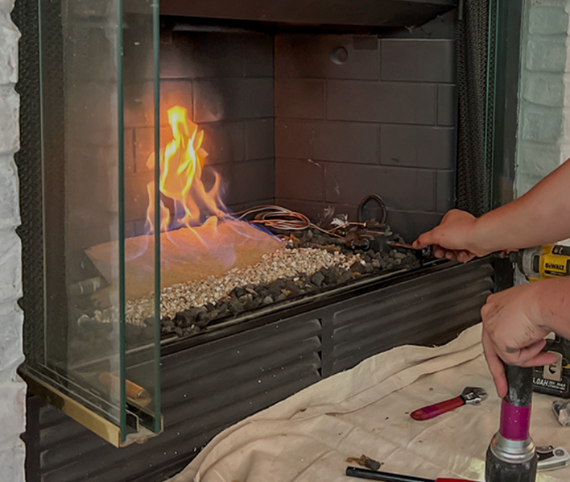
On the ignition system, the technician cleans the pilot light assembly (hood and orifice), tests spark ignition, measures thermocouple and thermopile output in millivolts, and checks the flame pattern. Weak millivolt output is a common cause of random shutdowns and failures to light, and the pilot flame pattern, height, and color tell us whether combustion is balanced or a partial blockage is restricting gas flow.

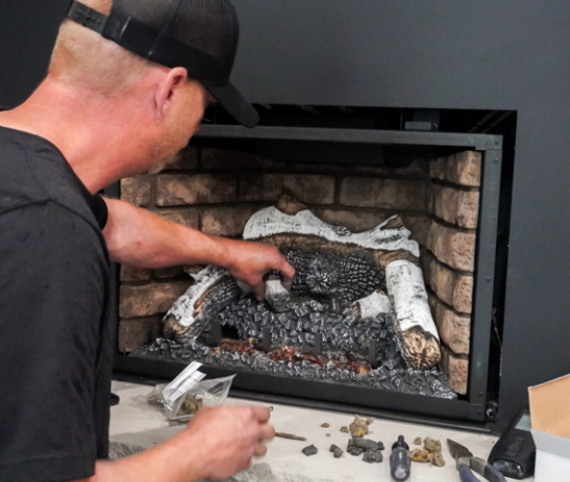
ABD technician working at the burner of a gas fireplace insert with the glass panel removed

Log Set, Glass, and Gasket: The Gas Fireplace Components We Inspect

Repositioning Logs, Vacuuming Debris, and Checking Glass and Gasket Integrity for a Sealed Combustion System

Ceramic gas logs and glass media get repositioned to the factory layout so air moves the way the manufacturer designed it. ABD vacuums dust and debris, removes cobwebs and insect nests, and inspects the refractory panels and firebox seams for cracks or distortion. The viewing glass comes off and gets cleaned inside and out, and fatigued gaskets are checked and replaced so the sealed combustion system stays sealed. Damaged glass or a tired gasket can expose your living space to open flame and combustion gases, which is why these fireplace components get their own step.

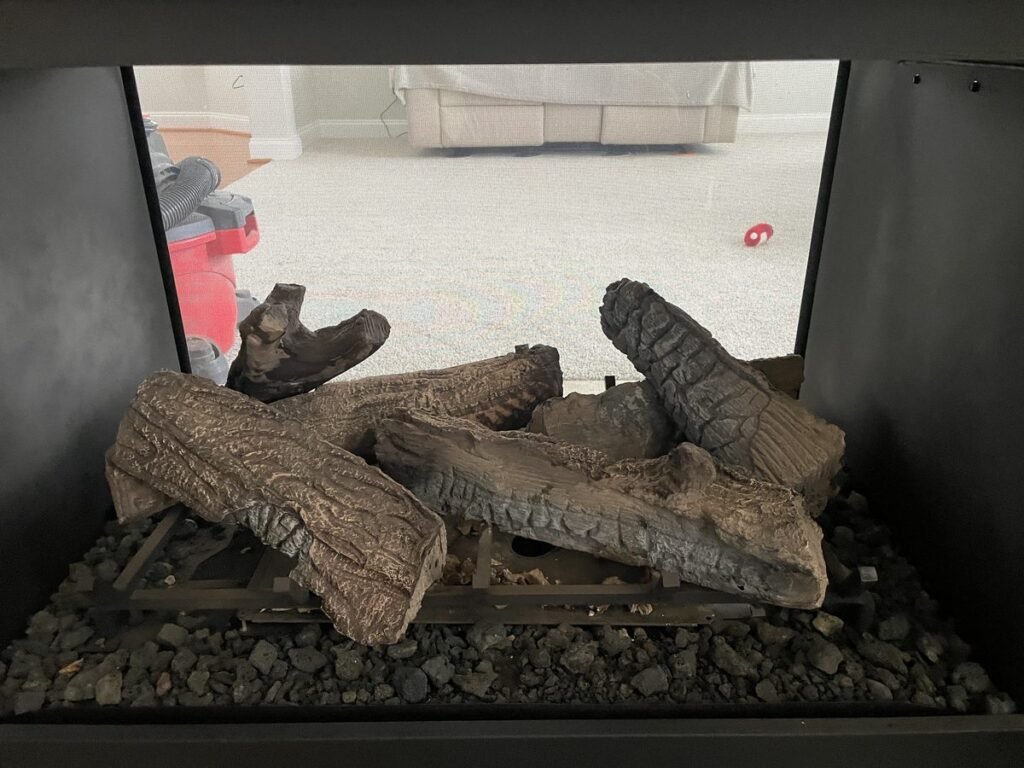
Gas log set and lava rock inside a see-through gas fireplace on an ABD service visit
A see-through gas fireplace log set on an ABD service visit.

Venting, Controls, and Safety Interlock Review

Direct-Vent, B-Vent, and Vent-Free Checks Plus Remote, Switch, and Spill-Switch Testing

Direct-vent and B-vent systems get a termination cap check, a look at the bird and rodent guards, clearances to combustibles, and confirmation that there are no obstructions, corrosion, or disconnected sections. Vent-free units get their oxygen-depletion sensor verified along with room sizing and airflow requirements per the manufacturer. Wall switches, remotes, batteries, and spill-switch and high-limit safeties are tested. The visit closes with a final combustion review and a concise written report. If we detect anything that compromises safety or performance, we’ll show you what we find and discuss next steps.

ABD technician placing ceramic logs back into a gas fireplace insert during a cleaning visit

Gas Fireplace Cleaning in Fairfax, VA

What ABD's Gas Fireplace Cleaning Includes

Pilot, Burner, and Media Cleaning Plus Glass Cleaning and Gasket Checks

Gas fireplace cleaning is about residue. A gas fireplace produces far less residue than a wood burning fireplace, so there’s no creosote buildup to sweep, but dust, pet hair, film on the glass doors, and spider webs still collect inside the components that matter most. Regular cleaning keeps the burner unit and pilot light working the way they should. ABD’s cleaning clears dust and debris from the burner, pilot, firebox, and louvers. The pilot hood and orifice are cleaned, and the viewing glass comes off and is cleaned inside and out, with the gasket checked so the glass seals properly. Logs and media go back exactly per the manufacturer layout, then the fireplace is relit and the flame checked.

You’ll get a clear explanation of the findings, with photos and millivolt readings where relevant, and honest recommendations.

Gas Fireplace Cleaning vs. Inspection: Why ABD Combines Both in One Visit

A Clean System Is Easier to Inspect Accurately, and a Proper Inspection Reveals Exactly What Needs Cleaning

An inspection is a systematic evaluation of safety, combustion, and gas fireplace components, done annually. Cleaning focuses on removing residue from the glass, logs, and firebox, clearing dust from burners and pilots, and tidying the surround and louvers. Wood burning systems need a chimney sweep to remove creosote; gas systems need this kind of routine cleaning instead, since there’s no wood smoke or soot buildup to manage. ABD bundles both because a clean system is easier to evaluate accurately, and an inspection pinpoints the exact places to clean. One appointment handles everything, so your fireplace is ready before the heating season.

What Fairfax Homeowners Can Safely Clean Themselves

Dusting Louvers, Replacing Remote Batteries, and Wiping Cool Exterior Glass Between Visits

Light upkeep between visits is fine: dust the exterior louvers and mantel area, replace remote and receiver batteries each season, keep the area around the fireplace clear for airflow, and gently wipe the outside of the glass with a microfiber cloth when the fireplace is cool. Leave the rest to a professional: opening the sealed firebox and cleaning the inside of the glass, pilot and burner cleaning, gas leak checks and pressure verification, and vent, termination, and gasket work. Yearly professional gas fireplace service is the safe baseline, and it’s the same regular maintenance rhythm you’d give any other gas appliances in the house.

How Often Gas Fireplaces Need Inspection and Cleaning in Fairfax

Once a Year, Even for Light Use: Annual Inspections for Gas Appliances

Schedule Sooner for Sulfur Odor, Delayed Ignition, Popping Noises, Sooty Glass, or Frequent Shutdowns

Once a year, even for light use. Annual inspections are the safest approach for gas fireplaces and other gas appliances, and late summer or early fall is a good time to book so the fireplace is ready when the weather turns. If you notice a rotten egg smell, delayed ignition, popping noises, unusual soot on the glass, or frequent shutdowns, schedule gas fireplace maintenance sooner. Excessive soot on the logs or glass is a sign of incomplete combustion, not a cosmetic quirk.

Direct-Vent and Vent-Free Models Both Need to Be Cleaned Annually

Confirming Sealed Glass, Sound Gaskets, Clear Vent Paths, and Oxygen-Depletion Sensor Function on Vent-Free Units

Direct-vent units draw combustion air from outdoors and exhaust outside, which is excellent for efficiency and indoor air quality. They still need annual inspection to confirm sealed glass, sound gaskets, and clear vent paths. Vent-free models must be checked for oxygen-depletion sensor function, clean burners, and correct room sizing and air exchange. Neither type is maintenance-free: gas fireplaces need the same yearly maintenance visit whether they vent outdoors or not, and both types benefit from being cleaned annually.

Gas Fireplace Safety: Carbon Monoxide and Venting

Why Annual Inspection Is a Carbon Monoxide Safety Issue

Carbon Monoxide Is Colorless and Odorless, and Every Gas Flame Produces It as a Normal Combustion Byproduct

Every natural gas flame produces carbon monoxide and water vapor as normal combustion byproducts. In a healthy gas fireplace, sealed glass and an intact venting pathway carry those combustion gases outdoors. When a gasket fails, a vent section disconnects, or a termination gets blocked, carbon monoxide can accumulate indoors. It’s colorless and odorless, so you can’t detect it without a working detector. Exposure causes headaches, dizziness, and confusion, and prolonged exposure can lead to unconsciousness. That’s why ABD recommends testing your carbon monoxide detectors during every visit, checks for gas leaks on every accessible fitting, and treats venting as a safety check, not a formality. Carbon monoxide detectors belong on every level of a home with gas appliances.

What ABD Checks in Your Venting System

Termination Caps, Bird and Rodent Guards, Clearances to Combustibles, and Confirming No Obstructions or Disconnected Sections

Obstructions in a venting system can prevent the safe exhaust of gases, so ABD inspects the termination cap, guards, and clearances, and confirms nothing is corroded, blocked, or disconnected. Storms are a common time for leaves and nests to end up in terminations. A gas fireplace only stays clean-burning when its vent is clear. If your fireplace vents through a masonry chimney, we visually confirm the accessible portions and termination conditions and recommend the appropriate chimney inspection if anything looks off.

Clear Findings and Next Steps

Inspection, Cleaning, and Documented Findings

We Show You What We Found and Discuss Next Steps

ABD’s gas fireplace service covers inspection, cleaning, and documentation. If the inspection turns up a failing valve, a cracked refractory panel, or a venting issue that needs more than cleaning, we show you what we found, with plain-language findings, photos, and readings, and discuss next steps with you.

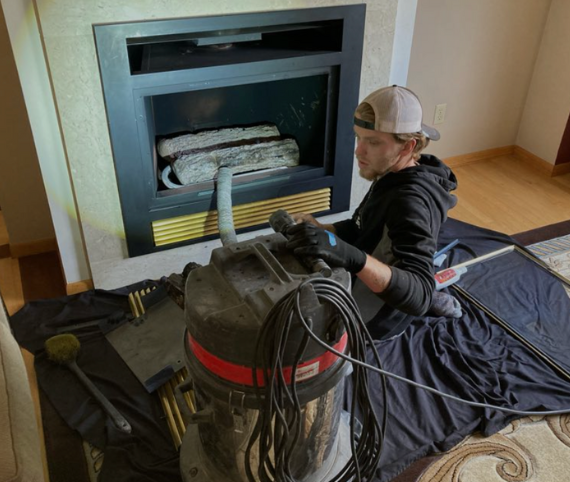
ABD technician vacuuming dust and debris from a gas fireplace insert in a customer's home

Gas Fireplace Service Across Fairfax and Northern Virginia

Serving Fairfax, Oakton, Vienna, and Nearby Communities

Fairfax, Oakton, Vienna, Annandale, Chantilly, Centreville, and the Rest of Northern Virginia

ABD serves Fairfax and the surrounding communities. Common issues in Fairfax, Oakton, and Vienna homes include dust-clogged pilots after summer downtime, aging gaskets causing persistent fogging or sooting on the glass, misplaced logs and media that disrupt the flame path and trigger safety shutdowns, and terminations full of leaves and nests after storms. Each of these is what a combined inspection and cleaning is built to catch.

Whether you need a gas fireplace inspection, gas fireplace maintenance, a gas log inspection, or a quick gas fireplace cleaning before a home sale, ABD has you covered across Northern Virginia. ABD also offers dryer vent cleaning and air duct cleaning.

Frequently Asked Questions

Do I really need an annual gas fireplace inspection?

Yes, Even Clean-Burning Units Wear Out Sensors and Seals

Yes. Even clean-burning units accumulate dust and experience wear on sensors and seals. Annual service ensures everything operates safely and efficiently.

What signs point to a needed gas fireplace service right now?

Slow Ignition, Returning Soot, Odors, Popping, or Random Shutdowns

Slow or failed ignition, sooty glass that returns quickly, unusual odors, popping sounds, or random shutdowns.

Is a vent-free system "maintenance-free"?

No, Vent-Free Units Still Need Annual Inspection

No. You still need an annual gas fireplace inspection to confirm clean burners, correct flame, and proper room airflow.

Do you inspect the chimney, too?

B-Vent and Masonry Chimney Checks, With Chimney Sweep Service Handled Separately

If your unit uses B-vent or a masonry chimney, we visually confirm accessible portions and termination conditions. If we find concerns, we’ll recommend the appropriate chimney inspection. Wood burning systems, including wood burning fireplaces and wood burning stoves, along with chimney components and full chimney sweep service, are handled through ABD’s chimney cleaning service, and chimney cap installation is available when a termination needs it.

How much does gas fireplace service and cleaning cost in Fairfax, VA?

Free Estimate First, Final Price Confirmed Before Any Work Starts

The cost depends on the fireplace type and what the inspection finds. ABD provides a free estimate, and confirms the final price with you before any work starts.

Related Services

Schedule Gas Fireplace Service in Fairfax, VA Today

Beat the first cold snap. Schedule gas fireplace service with ABD Air Duct and Vent Cleaning and get a documented safety and efficiency tune-up tailored to Fairfax homes. We’ll test for leaks, clear debris, clean the glass and logs, verify venting, and test the ignition so your fireplace is ready when you are.