
October arrives. Temperatures finally drop. You walk over to the fireplace you haven’t touched since March, open the damper, toss in some wood, strike a match — and either something smells wrong, the smoke doesn’t draw right, or you just feel uneasy about the whole thing.
That unease is worth listening to.
In Northern Virginia, chimney fires are a real and recurring problem every fall and winter. Local fire departments respond to them every heating season — and the overwhelming majority trace back to a single cause: creosote buildup in a chimney that hadn’t been cleaned or inspected in over a year.
This guide will walk you through everything you need to know before fireplace season starts. Not a sales pitch. An actual guide.a
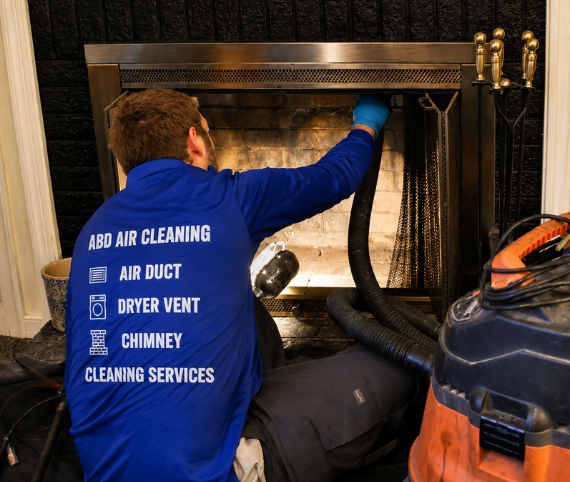
Every time you burn wood in a fireplace, combustion produces gases, water vapor, and unburned carbon particles. As that smoke rises through your flue, it cools. And as it cools, those particles condense and stick to the inside of your chimney walls as creosote — a dark, flammable residue that builds up with every fire you light.
The Chimney Safety Institute of America classifies creosote in three stages:
Stage 1 — Light, dusty deposits. Brushes off easily. Low immediate risk but still needs to be removed regularly.
Stage 2 — Flaky or crunchy, tar-like buildup. More difficult to remove. Risk of ignition is meaningfully elevated.
Stage 3 — Hardened, glazed, almost shiny deposits that coat the flue walls. Resists standard cleaning equipment. At this stage, a single hot fire can ignite the creosote itself — and a creosote fire inside a flue can reach temperatures exceeding 2,000°F.
That number matters. Your chimney liner — whether clay tile, stainless steel, or cast-in-place — is designed to contain normal combustion temperatures. At 2,000°F, liner integrity fails. Cracks form. And now you have a path for fire to reach the wooden framing of your home.
Why Northern Virginia specifically?
Our humid, temperate climate means wood doesn’t always burn as cleanly as it would in a drier region. Wet or green wood — very common when homeowners buy firewood from roadside vendors — produces dramatically more creosote per fire than properly seasoned hardwood. Additionally, Northern Virginia’s freeze-thaw cycles put particular stress on masonry chimneys over time. A single winter of temperature swings can open cracks in mortar joints and chimney crowns that water then enters, accelerating deterioration. A chimney that looked fine last spring may have significant damage by fall.
A recent inspection study in Northern Virginia found creosote accumulation in over 60% of chimneys inspected — most of which had not been cleaned in more than a year.
NFPA 211 is the national safety standard for chimneys, fireplaces, and venting systems. It’s the code that certified chimney sweeps are trained and tested to, and it’s the standard that fire departments and insurance companies reference when investigating chimney fires.
Here is what it says about inspection frequency, in plain language:
All chimneys, fireplaces, and venting systems should be inspected at least once a year — regardless of how often they’re used.
That’s not a suggestion. It’s the recognized safety standard. And critically, the standard defines three levels of inspection:
Level 1 — Annual routine inspection For a chimney in continued use with no changes. Covers accessible exterior and interior portions, checking for obstruction, combustible deposits, and basic structural soundness. This is what most homeowners need every year before fireplace season.
Level 2 — Required when changes occur Mandatory when you’ve bought or sold the home, switched fuel types, had a chimney fire, or experienced severe weather damage. Includes video scanning of the flue interior to check for cracks, liner damage, or hidden hazards. If you’ve moved into a Northern Virginia home and don’t know the chimney history — this is your level.
Level 3 — Reserved for suspected serious damage Involves opening concealed portions of the chimney structure. Rare, but necessary when a Level 2 inspection suggests hidden damage that can’t be assessed otherwise.
NFPA 211 is the national safety standard for chimneys, fireplaces, and venting systems. It’s the code that certified chimney sweeps are trained and tested to, and it’s the standard that fire departments and insurance companies reference when investigating chimney fires.
Here is what it says about inspection frequency, in plain language:
All chimneys, fireplaces, and venting systems should be inspected at least once a year — regardless of how often they’re used.
That’s not a suggestion. It’s the recognized safety standard. And critically, the standard defines three levels of inspection:
Level 1 — Annual routine inspection For a chimney in continued use with no changes. Covers accessible exterior and interior portions, checking for obstruction, combustible deposits, and basic structural soundness. This is what most homeowners need every year before fireplace season.
Level 2 — Required when changes occur Mandatory when you’ve bought or sold the home, switched fuel types, had a chimney fire, or experienced severe weather damage. Includes video scanning of the flue interior to check for cracks, liner damage, or hidden hazards. If you’ve moved into a Northern Virginia home and don’t know the chimney history — this is your level.
Level 3 — Reserved for suspected serious damage Involves opening concealed portions of the chimney structure. Rare, but necessary when a Level 2 inspection suggests hidden damage that can’t be assessed otherwise.
If your home changed hands in the last few years — very common in Northern Virginia’s active real estate market — and you haven’t had a Level 2 inspection done, that’s the starting point, not a Level 1.
This is worth understanding before you book anyone. A lot of companies offer “chimney cleaning” but don’t define what’s actually included. Here’s what a thorough professional service should cover every time:
The flue. The primary channel smoke travels through. This is where creosote accumulates. Cleaned using professional rotary brush equipment that clears the full length of the flue from firebox to cap.
The firebox. The chamber where the fire actually burns. Should be inspected for cracks in the refractory panels, loose mortar joints, and any structural concerns. Soot and ash buildup inside is removed during the cleaning.
The smoke chamber and smoke shelf. The area above the firebox and below the flue. The smoke shelf catches debris — including bird nesting material, leaves, and anything that falls down the chimney. This area is frequently skipped by less thorough companies.
The damper. Inspected for proper operation, fit, and condition. A damaged or stuck damper means cold air enters your home when the fireplace isn’t in use — and can mean smoke backdrafts when it is.
The chimney cap and crown. The cap prevents rain, animals, and debris from entering. The crown is the mortar or concrete surround at the top of the chimney structure. Both are inspected for cracks, deterioration, and fit. In Northern Virginia, freeze-thaw cycles crack mortar crowns faster than in milder climates — a cracked crown is one of the leading causes of water intrusion and accelerated chimney deterioration.
Most chimney cleaning guides are written generically. Here are the factors specific to our region that matter:
Wildlife pressure is high. Northern Virginia’s dense tree canopy — particularly in communities like Great Falls, McLean, Vienna, Falls Church, and the wooded corridors of Fairfax County — means birds and squirrels actively target chimney caps as nesting sites. Chimney swifts (a federally protected migratory bird) nest in chimneys from May through October. If a nest is present and active, it legally cannot be removed until the birds migrate. If you’re finding your chimney draws poorly in fall, a nest from the previous spring may still be sitting on your smoke shelf.
Older masonry chimneys throughout the region. Significant portions of the housing stock in Annandale, Burke, Springfield, Fairfax City, and older Alexandria neighborhoods includes original masonry chimneys from the 1960s and 1970s. These structures have now experienced 50–60 years of weathering. Mortar joints in older masonry chimneys tend to deteriorate faster in Northern Virginia’s humid summers and freeze-thaw winters than in drier climates. Annual inspection is especially important for these homes.
Prefabricated fireplaces in townhomes. Many of Northern Virginia’s townhomes — particularly in communities built between 1985 and 2005 in Chantilly, Centreville, Herndon, and Reston — have prefabricated (factory-built) metal fireplace systems rather than masonry chimneys. These systems have specific service requirements and lifespan limitations. The panels inside the firebox, the air-cooled housing, and the insulated chimney sections all have defined service lives. A professional inspection will identify when components need replacement before they become safety issues.
Gas fireplace systems need attention too. Many Northern Virginia homes have gas fireplace inserts, gas log sets, or direct-vent gas fireplaces. These are commonly assumed to be maintenance-free because there’s no wood burning. They aren’t. Gas combustion produces moisture and minor deposits. Spiders build webs inside gas appliance vents that can restrict gas flow and cause incomplete combustion — a carbon monoxide risk. Annual inspection of gas fireplace systems is recommended regardless of how little they’re used.
Everybody thinks of chimney cleaning as a fall service. Schedule it in October and you’re fine, right?
Not quite.
In Northern Virginia, demand for chimney service spikes sharply in September and October as temperatures start to drop. Most reputable chimney companies — including ABD — see their fall calendars fill up quickly once the first cool snap hits. Homeowners who call in late October are often looking at a 2–3 week wait for an appointment, which means their fireplace is unavailable for the first part of the season.
The best window to book chimney service in Northern Virginia is late August through mid-September. Before the rush. Before the temperatures drop enough to make people feel urgent about it.
If you’re reading this in September or October — call now. Don’t wait until the first cold weekend when everyone else has the same idea.
And if you’re reading this in spring or summer — bookmark this and come back in August. Or just call us and put yourself on the schedule early.
Chimney cleaning costs vary depending on the type of system, the level of buildup, and what inspection is included. Here’s an honest breakdown for Northern Virginia in 2026:
| Service | Estimated cost |
|---|---|
| Level 1 inspection + chimney cleaning | $169 |
| Level 1 inspection only | $99 |
| Level 2 inspection (includes video scan) | $149 |
| Heavy creosote removal (Stage 2–3 buildup) | Quoted after inspection |
| Gas fireplace inspection and cleaning | $199 |
| Chimney cap replacement | Quoted after inspection |
| Bundle: chimney + air duct cleaning same visit | Save $49 when booked together |
A note on the $70 offers you’ll see online: those prices typically cover a basic visual inspection with minimal actual cleaning. Legitimate professional chimney cleaning — using proper brush equipment, vacuum containment, and a thorough inspection of all components — costs more. A technician who quotes $70 and spends 20 minutes at your home has not properly swept your chimney.
ABD provides a free estimate before starting any work. You’ll know exactly what we’re doing and what it costs before we begin.
ABD Air Duct & Vent Cleaning is locally owned and based right here in Fairfax, VA. We’ve served homeowners throughout Northern Virginia with chimney cleaning, air duct cleaning, dryer vent cleaning, and gas fireplace inspection — often bundled in a single visit at a discounted rate.
 (571) 581-9131
  info@abdaircleaning.com
  Book online here
We serve Fairfax (22030–22037) · Arlington (22201–22209) · Alexandria (22301–22315) · McLean (22101, 22102) · Great Falls (22066) · Vienna (22180–22182) · Annandale (22003) · Burke (22015) · Springfield (22150–22153) · Chantilly (20151, 20152) · Centreville (20120, 20121) · Reston (20190–20194) · Herndon (20170, 20171) · Falls Church (22041–22046) · Woodbridge (22191–22195) · Manassas (20109, 20110) · Ashburn (20147, 20148) · and all surrounding Northern Virginia communities.
How often should I have my chimney cleaned in Northern Virginia? Once a year minimum, per NFPA 211. If you burn more than 2–3 cords of wood per season, or if you’ve been burning green or wet wood, schedule it every season. Homes that use the fireplace only occasionally should still have an annual inspection even if a full sweep isn’t needed every year.
What’s the difference between a chimney sweep and a chimney inspection? A sweep removes existing buildup — soot, creosote, debris. An inspection assesses the structural and functional condition of the system. A proper annual service includes both. An inspection without cleaning tells you what’s there; a cleaning without inspection misses structural issues that could be just as dangerous.
I have a gas fireplace. Do I still need annual service? Yes. Gas fireplace vents can accumulate spider webs, insect nests, and minor deposits that restrict gas flow or vent combustion gases improperly. Annual inspection is recommended for gas systems regardless of use level.
My chimney smells smoky even when there’s no fire. What does that mean? Usually one of three things: creosote absorbing humidity and releasing odors (very common in NoVA summers), a damaged or improperly fitted damper allowing downdrafts, or a structural issue allowing outside air to carry odors in. All three are diagnosable during a professional inspection.
I just bought a home in Northern Virginia. What inspection level do I need? Level 2 per NFPA 211 — required on any change of ownership. This includes a video scan of the flue interior to check for cracks, liner damage, and hidden obstructions that aren’t visible during a standard Level 1 inspection.
Can I bundle chimney cleaning with my air duct or dryer vent cleaning? Yes — and you should. ABD performs all three services. Booking everything in the same visit saves time and qualifies for bundle pricing. It’s the most efficient way to get your home’s air systems serviced before winter.