
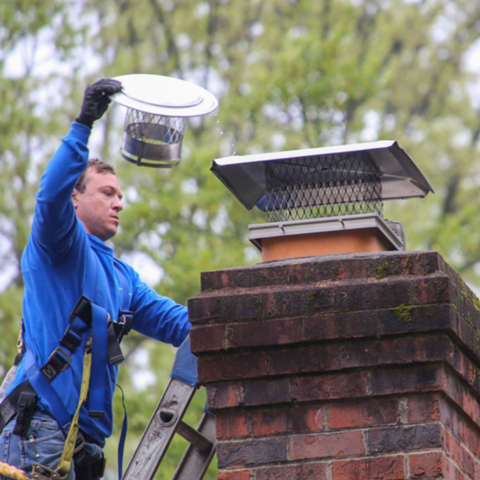
A chimney cap is the metal cover at the top of the chimney, and it does more work than any other part of the stack. It keeps rain and snow out of the flue, it keeps birds, raccoons, and other animals from nesting in the chimney, and it prevents sparks from landing on the roof and possibly igniting a fire.
Backed by a 5.0-star rating across hundreds of Google reviews, ABD Air Duct & Vent Cleaning installs chimney caps on homes across Fairfax County and Northern Virginia. One properly installed chimney cap protects the flue, the firebox, and the roof for years to come.
On this page, you’ll discover what’s at stake when the flue is left open, the most common types of chimney cap and materials, when a new cap needs to be installed, and how the chimney professionals at ABD handle the chimney cap installation process for your Northern Virginia home.
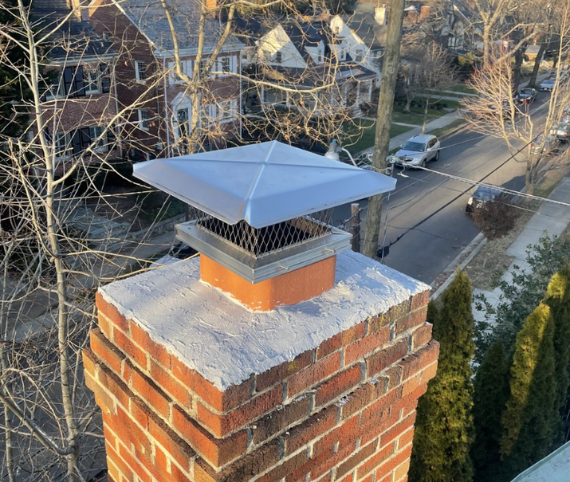
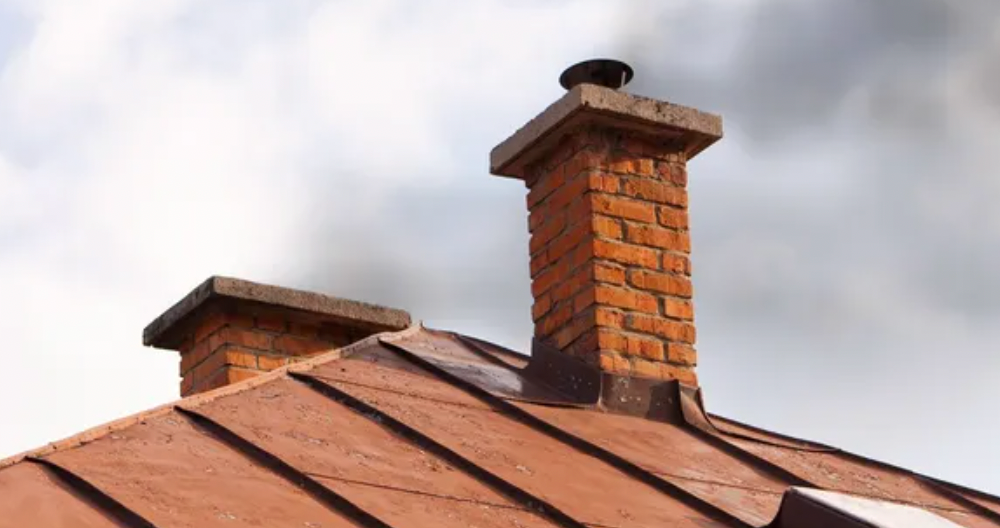
An open chimney is a hole in your roof. Every storm sends rainwater down the flue, where it rusts out the damper, soaks into the mortar joints, and possibly leads to mold growth. Over a few Northern Virginia winters, that water freezes and thaws inside the masonry and cracks the flue liner. A chimney cap reduces moisture exposure and helps prevent water damage to the flue, smoke chamber, and firebox, and it extends the lifespan of everything it covers. In addition, chimney caps also improve venting efficiency for fireplaces and stoves.
A warm, protected shaft looks like home sweet home to birds, squirrels, raccoons, and other animals, especially in spring when the chimney goes unused. Nests cause blockages in the flue, and animals that fall in can’t climb the slick liner back out. A cap with a mesh screen keeps out animals and other debris, including the leaves and branches that pile up on the roof every fall. Scratching in the chimney usually means someone’s in trouble, and that’s the result of a bad cap or no cap at all.
Hot embers get pulled up the chimney flue by the draft of rising air. That’s just physics, but without a cap, sparks can land on the roof, in the gutters, or on the neighbor’s deck. The spark-arrestor mesh catches them first. A cap also breaks up the high wind gusts that push smoke back down the flue, so smoke, soot, and carbon monoxide stay out of the house instead of backing up into the room. Blockages from nests or debris cause the same carbon monoxide problem, which is one more reason to protect the flue with a cap. Homeowners who fight downdrafts every windy night often find the missing piece is a chimney cap.
For a chimney cap, the type of material matters more than anything else. Cheap galvanized steel rusts within a few seasons and streaks the chimney orange. Stainless steel chimney caps resist rust, rain, snow, and heat, which makes them the standard choice for Fairfax homes. Copper caps cost more and weather to a green patina that suits older brick. Either of these materials outlasts galvanized steel many times over.
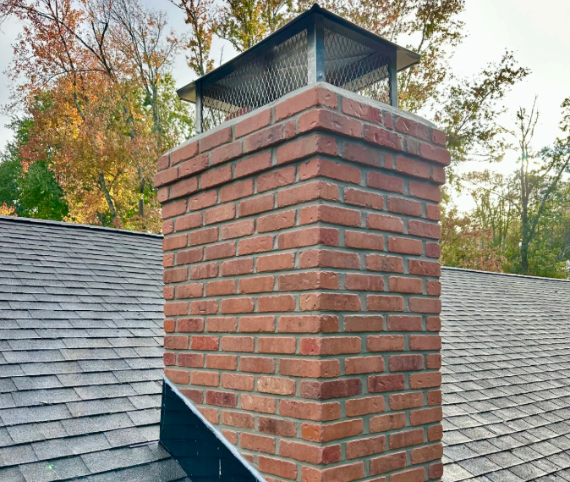
Single-flue chimney caps fit one flue tile and are the most common install; most single-family homes in Fairfax need single-flue chimney caps and nothing more. A multi-flue chimney cap spans two or more flues under one hood, typical when a furnace flue and a wood-burning flue share the same chimney. A custom chimney cap, or chase cover, is fabricated to the exact dimensions of a large chimney chase. The right cap depends on how many flues you have and how the chimney crown is built, so the top of the chimney gets measured before anything is ordered.
Bolt-on caps attach to the flue tile with bolts or screws that tighten against the clay and fit square, rectangular, or round flues. Band-around caps wrap the top course of brick and secure with a band, the answer when a flue tile is too short to grab. Universal-fit caps use an anchoring system matched to specific flue dimensions, and slide-in caps drop into the flue with no screws at all. Correct sizing matters as much as the design: A chimney cap that’s too small won’t shed rain or protect the crown, and one that’s too large won’t stay put in a storm. Whichever design fits, a professional will properly install it with the right tools from a secured ladder, not by guessing from the ground.
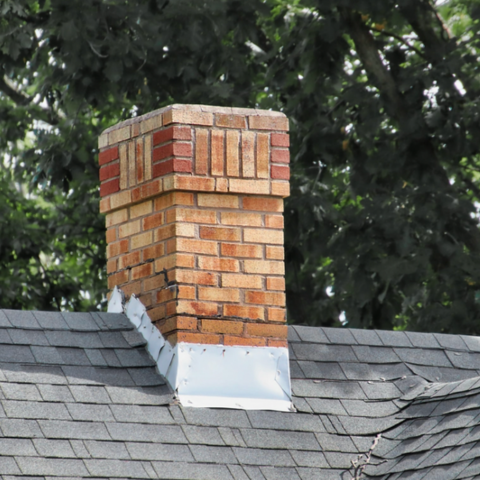
After a major storm, take a look at your cap from the ground. Rust streaks on the chimney crown, a hood sitting crooked, torn or clogged mesh, or a cap that rocks in the wind all mean it’s done. A properly installed cap should not wobble or lift; once the bolts, brackets, or screws rust through, the next gust can put the whole cap on the roof.
Plenty of Fairfax County homes were constructed or re-roofed without a cap, and homeowners rarely notice until water stains appear on the ceiling or a bird flies through the living room. An open flue collects rain, leaves, and animals all year and lets sparks escape every time you light a fire. But don’t worry, there’s a solution: Installing a cap on an open flue is the cheapest protection a chimney can get.
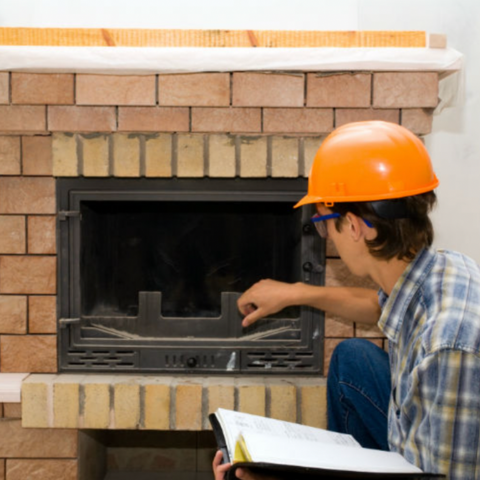
Many cap problems are discovered when ABD is already at the house performing a cleaning or maintenance. During a chimney cleaning, the technician works the full height of the flue, and a rusted, loose, or missing cap is hard to miss from the top. During a gas fireplace inspection, ABD visually confirms the accessible portions of a B-vent or masonry chimney and its termination conditions, which is exactly where the cap sits. You’ll hear about a failing cap before it becomes a water or animal problem. Cap checks are also part of every dedicated chimney inspection visit.
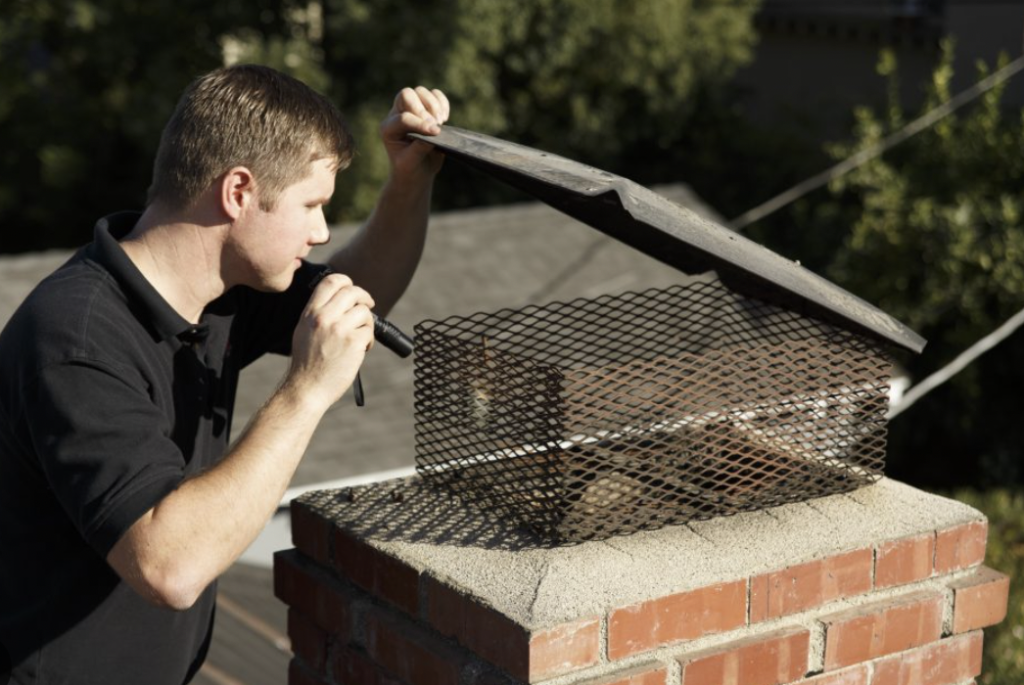
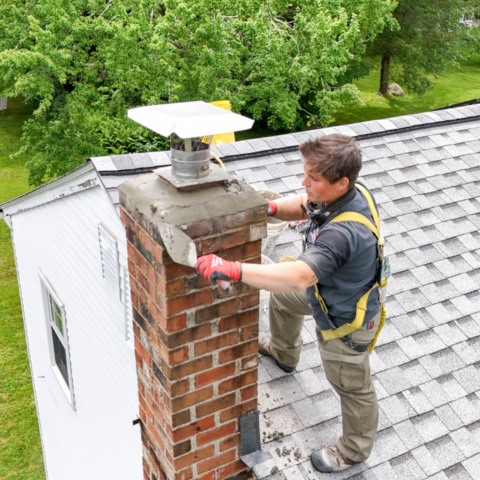
ABD measures the flue dimensions and the crown first, then matches the cap to what’s on your roof: Single-flue caps, multi-flue caps, or a custom chase cover. A professional technician will properly install the correct cap, attaching and securing it to the flue or the brick with the right bolts or screws, tighten it so it sits level and can’t lift (and has no gap between the cap and the perimeter), and confirm the mesh is clear so airflow isn’t restricted. Professional installation means correct placement and a cap that stays on; a badly installed cap ends up in the gutter and lets sparks onto the roof.
Is it a DIY project? No, not really. Installing a cap yourself means renting a ladder, putting on a safety harness, carrying the right tools onto a steep roof, and getting the fit right on the first try. ABD’s technicians already have the ladder, the tools, and the experience to slide it into place and attach it correctly. Plus, our professionals can adapt to unexpected installation challenges, which is why many homeowners call us to install it instead of doing it themselves.
Estimates are free, and you’ll know the cost before any work begins. ABD does not perform structural chimney repair, crown repair, or liner work. If the installation process reveals a cracked crown or damaged masonry, ABD will show you what we found and refer you to a trusted contractor for that work.
ABD is based in Fairfax, VA. We install chimney caps at homes, investment properties, and other locations across the city of Fairfax and Fairfax County, including neighborhoods all over Vienna and Oakton, where older brick chimneys and mature trees make a solid cap installation especially important.
ABD also serves Alexandria, Arlington, Springfield, Falls Church, Gainesville, Annandale, Chantilly, Great Falls, Reston, Tysons, McLean, Burke, Centreville, Herndon, Ashburn, Leesburg, Manassas, Woodbridge, and the rest of Northern Virginia, suburban Maryland, and Washington DC (the entire DMV region).
It depends on the number of flues, the cap material, and whether you need a standard cap or a custom chase cover. ABD provides a free estimate before starting any work and confirms the price with you up front, with no hidden fees.
For most Fairfax County homes with one flue, a single-flue chimney cap in stainless steel is the best balance of durability and cost, and copper suits historic brick. If two flues share one chimney, a multi-flue cap covers both, and an oversized chase calls for a custom cap configured to its dimensions.
Rust streaks on the crown, a cap that rocks or sits crooked, torn or clogged mesh, or a bare flue tile with nothing on it. Debris or water in the firebox after a storm is another clue.
We do both! Chimney cap installation is one of ABD’s premier chimney services, and when a technician notices a failing cap during a cleaning or inspection visit, ABD can install the new cap.
The hood keeps rain and snow out of the flue, and the mesh keeps birds, raccoons, squirrels, leaves, and other debris out while allowing proper ventilation. It also catches sparks on the way up and steadies the draft on windy days.
Whether your chimney has no cap (or the old one has rusted through), ABD can measure, install, and properly attach a new one, and the installation takes far less time than the water or animal damage a missing cap eventually causes.
We’d love to mark our calendars with your chimney cap installation. Just call (571) 581-9131, book online, or contact us to schedule a chimney cap install on your home in Fairfax County and Northern Virginia.
(571) 581-9131
info@abdaircleaning.com
Mo-Sun 8AM-8PM
Satisfaction
Located in Fairfax, ABD Air Duct and Vent Cleaning offers top-quality dryer vent, chimney air duct cleaning services to ensure a healthier and cleaner indoor environment.