
Every few weeks, we get a similar call from homeowners across Northern Virginia. Their dryer is taking much longer than usual, clothes are still damp after a full cycle, or they have to run the dryer two or three times just to finish one load.
At ABD Air Duct & Vent Cleaning, we see this problem regularly. Because clogged dryer vents are a common cause of long drying times, many homeowners assume the vent simply needs to be cleaned.
Sometimes they’re exactly right. We clean the dryer vent, restore proper airflow, and the dryer starts working much better.
But sometimes we inspect the vent and find that the airflow is fine. In those cases, the problem may actually be inside the dryer itself.
We believe it’s better to identify the real problem than perform a service that won’t solve it. So here’s how you can tell whether you’re dealing with a clogged dryer vent, a dryer problem, or possibly both.
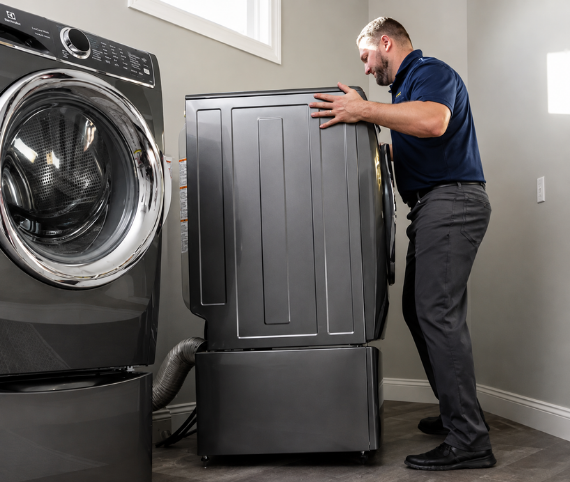
A clothes dryer works by heating air and moving that hot air through your clothes while the drum tumbles.
The moisture pulled from your clothes then needs somewhere to go.
That hot, humid air travels through the dryer vent duct and exits through an exterior vent on the outside of your home.
When the vent is working properly, the dryer can efficiently remove heat and moisture.
But lint can gradually build up inside the duct.
Your lint screen catches a large portion of the lint produced during drying, but some lint can still travel into the vent system. Over time, buildup can occur inside the duct, around bends, near connections, and at the exterior vent cover.
Long dryer vent runs and ducts with several elbows can also make airflow problems more likely.
As airflow becomes restricted, your dryer has to work harder and drying times may increase.
Restricted dryer airflow can also create excessive heat, which is why keeping the dryer exhaust system clear is an important part of dryer maintenance and fire prevention.a
Here are some common symptoms of restricted dryer vent airflow.
This is one of the most common signs we see.
If the dryer is clearly producing heat but your clothes remain damp after a normal cycle, the moisture may not be escaping efficiently through the vent.
When you open the dryer, the clothes may feel unusually hot or the drum may feel hot and humid.
That can strongly suggest an airflow problem.
Dryer vent restrictions usually develop over time.
For example, a load that once dried in 40–50 minutes may eventually take 70–90 minutes or require a second cycle.
A gradual increase in drying time can be an early warning sign that airflow is becoming restricted.
Your dryer is supposed to exhaust hot, humid air outside.
If the laundry room becomes unusually warm or humid while the dryer is running, there may be an airflow issue, damaged transition duct, or disconnected vent connection.
While the dryer is running, check the exterior dryer vent if it is safely accessible.
Normally, you should feel a steady flow of warm air coming from the vent.
If airflow seems unusually weak, the exterior flap barely opens, or there is no noticeable airflow, there may be a restriction somewhere in the system.
However, weak airflow can occasionally be caused by a dryer blower problem as well, so a proper inspection is still recommended.
Heavy lint buildup around the outside vent cover can indicate that the dryer vent system needs attention.
The exterior cover itself can also become clogged with lint or debris.
A burning smell should always be taken seriously.
If you notice a strong burning or overheating smell while the dryer is running, stop using the dryer and have the system inspected before continuing.
The cause could be lint buildup, an overheating dryer component, or another mechanical problem.
Some symptoms are much more likely to indicate an appliance problem rather than a clogged dryer vent.
If the drum is turning but the clothes remain completely cold, the heating system may not be working properly.
On electric dryers, possible causes can include the heating element, thermostat, thermal fuse, or electrical components.
On gas dryers, possible issues can involve the igniter, gas valve components, flame sensor, or other parts.
These problems require an appliance repair technician.
A clogged vent normally will not prevent the dryer from turning on under ordinary conditions.
A dryer that will not start may have problems involving the door switch, motor, belt, control board, thermal fuse, or electrical system.
If you hear the motor but the drum does not rotate, the problem may involve the drive belt, motor, rollers, or other internal dryer components.
Dryer vent cleaning will not correct these mechanical problems.
Unusual mechanical noises often point toward components inside the dryer.
Possible causes include worn drum rollers, an idler pulley, drive belt problems, blower wheel issues, or other internal components.
Repeated breaker trips can indicate an electrical issue and should be evaluated by a qualified appliance repair technician or electrician.
Dryer vent restrictions often build gradually.
If your dryer worked normally one day and suddenly stopped heating the next, there may have been a component failure.
That does not completely rule out a vent issue, but a sudden failure is more commonly associated with the appliance itself.
Many modern dryers from manufacturers such as Samsung, LG, Whirlpool, GE, and others can display diagnostic or airflow-related error codes.
Check your owner’s manual or manufacturer guidance for the meaning of the specific code.
Some codes may indicate a dryer problem, while others may actually warn about restricted airflow.
This is where things can get confusing.
A restricted dryer vent can sometimes contribute to problems inside the dryer.
When hot air cannot escape efficiently, temperatures inside the dryer can increase. Dryers contain safety components designed to protect the appliance from excessive heat.
One of these components is commonly called a thermal fuse.
If excessive temperatures cause the thermal fuse to fail, the dryer may stop heating or, depending on the model, stop operating altogether.
In a situation like this, there may be two problems:
Replacing the appliance component without correcting the airflow problem may allow overheating to happen again.
At the same time, cleaning the vent will not repair a component that has already failed.
That’s why it can sometimes take both a dryer vent specialist and an appliance repair technician to completely solve the problem.
You can perform a few basic observations before calling for service.
Use a normal drying cycle with a small load.
After around 10 minutes, carefully open the dryer.
If the dryer and clothes are noticeably warm or hot but still very damp, an airflow restriction may be contributing to the problem.
If everything remains cold, the dryer may have a heating problem.
This is only a basic indicator and not a complete diagnosis.
If the exterior dryer vent is safely accessible, check it while the dryer is operating.
You should normally feel steady warm air coming from the vent, and the exterior flap should open.
Very weak airflow may indicate a blocked, crushed, disconnected, or otherwise restricted vent.
Without moving anything unsafely, check whether the transition duct behind the dryer appears crushed, kinked, disconnected, or heavily compressed.
This is a very common airflow problem.
Dryers are often pushed too close to the wall, which can crush the duct behind them.
If the dryer, laundry room, or clothes seem unusually hot, stop using the dryer until the cause is determined.
Excessive heat can indicate restricted airflow or a problem inside the appliance.
If your dryer is producing heat but takes too long to dry, the first thing worth checking is often the dryer vent airflow.
At ABD Air Duct & Vent Cleaning, we specialize in dryer vent cleaning, inspection, and repair throughout Northern Virginia.
We inspect the vent system, check airflow, look for restrictions, and identify problems such as:
If the dryer vent is clear and the problem appears to be inside the appliance, we’ll tell you.
For appliance-related problems, we regularly recommend Dryer Repair Medic, a dryer repair company based in McLean that serves Northern Virginia, Washington, DC, and nearby Maryland communities.
They specialize specifically in dryer repair and can diagnose problems involving heating elements, thermal fuses, motors, belts, rollers, electrical components, and other internal dryer parts.
You can learn more at Dryer Repair Medic.
We would rather point a homeowner toward the right specialist than recommend a dryer vent cleaning that isn’t going to solve the problem.
And when the dryer and the vent both have issues, addressing both sides of the system helps prevent the same problem from coming back.
Whether your current problem is the vent or the dryer itself, a few simple habits can improve dryer performance and safety.
A clean lint filter helps maintain airflow through the dryer.
Make it a habit to check it before or after every cycle.
How frequently a dryer vent needs cleaning depends on the household and the vent system.
Many homes benefit from annual inspection or cleaning, while some systems may need service more frequently.
Factors that can increase lint buildup include:
Rigid or semi-rigid metal duct is generally preferred for dryer exhaust systems.
Thin flexible foil ducts can become crushed, kinked, or damaged and can collect lint more easily inside their ridges.
Plastic dryer vent ducts should not be used.
One of the most common problems we find is a dryer pushed tightly against the wall with the transition duct crushed behind it.
Make sure there is enough room for the dryer vent connection to maintain proper airflow.
Shorter and straighter dryer vent runs generally provide better airflow.
Every elbow and long section of duct adds resistance to the system.
Overloading the drum can reduce airflow through the clothes and significantly increase drying time.
Your dryer often gives you warning signs before a serious problem develops.
If loads are gradually taking longer than they used to, don’t ignore it.
The earlier you identify an airflow restriction, the easier it usually is to correct.
If your dryer is heating but your clothes are still taking too long to dry, the dryer vent may be the problem.
ABD Air Duct & Vent Cleaning provides professional dryer vent cleaning, inspection, repair, and replacement throughout Fairfax, Arlington, Alexandria, McLean, Vienna, Reston, Herndon, Springfield, Centreville, Chantilly, and surrounding Northern Virginia communities.
We can inspect the dryer vent, check the airflow, identify restrictions, and let you know whether the problem appears to be the vent or the dryer itself.
If the vent is the problem, we can help fix it.
If the dryer needs appliance repair instead, we’ll tell you that too.
Our goal is simple: find the actual problem and help you get your dryer working properly again.
(571) 581-9131
info@abdaircleaning.com
Mo-Sun 8AM-8PM
Satisfaction
Located in Fairfax, ABD Air Duct and Vent Cleaning offers top-quality dryer vent, chimney air duct cleaning services to ensure a healthier and cleaner indoor environment.