
If you’ve noticed a musty or stale smell every time your air conditioning or heat kicks on, there’s a strong possibility you have mold growing inside your ductwork.
In Northern Virginia, this is more common than most homeowners expect. Our humid summers, long HVAC run times, and tightly sealed modern homes create near-perfect conditions for mold to take hold inside duct systems — and once it does, your HVAC becomes a distribution system, spreading mold spores into every room of your home every time it cycles.
This is not a situation to wait on.
At ABD Air Duct & Vent Cleaning, we’re a QUADCA-certified company based in Fairfax, VA. We’ve found and removed mold from ductwork in homes across Fairfax, Arlington, Alexandria, Chantilly, Burke, Reston, and throughout Northern Virginia. In this guide we’ll walk you through exactly what mold in air ducts looks and smells like, what it does to your health, why Northern Virginia homes are particularly vulnerable, and what to do about it right now.
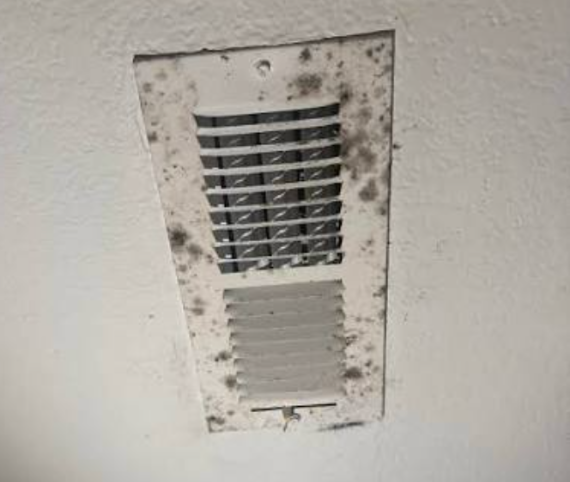
Do not run your HVAC system if you can see visible mold inside a vent opening or around a register — running the system will spread spores throughout your home. Turn it off and call us immediately.
 ABD Air Duct & Vent Cleaning: (571) 581-9131 We serve all of Northern Virginia and offer same-day appointments in many cases.
Before we get into signs and solutions, it’s worth understanding why this problem is particularly common in our region — because the NoVA environment is genuinely different from the rest of the country.
Northern Virginia summers are hot and genuinely humid. When warm, moist air contacts the cool metal surfaces of your air conditioning ducts, condensation forms on the inside duct walls. That moisture — combined with the dust and organic debris that accumulates in any duct system — creates exactly the conditions mold needs to grow: moisture, darkness, and a food source.
The EPA recommends keeping indoor relative humidity between 30% and 50% to discourage mold growth. Northern Virginia’s outdoor humidity regularly exceeds 80% in summer. Even with your AC running, maintaining those indoor humidity levels consistently is a challenge for many homes.
Your air conditioning runs almost continuously from May through September in Northern Virginia. That’s five or more months of cold duct surfaces in contact with humid air — far more condensation opportunity than homes in drier or cooler climates. The longer the system runs in humid conditions, the more moisture cycles through your ductwork.
This one surprises many homeowners. If your HVAC system is oversized for your home — which is common in Northern Virginia, particularly after equipment upgrades — it cools your space too quickly and shuts off before it has fully removed the moisture from the air. This is called “short cycling,” and it leaves your ductwork damp without completing the dehumidification process. Damp ducts are an open invitation for mold.
Modern homes in Northern Virginia — and older homes that have been updated with better insulation and windows — are far more airtight than homes built decades ago. This is great for energy efficiency but means moisture generated indoors (cooking, showers, breathing, plants) has fewer opportunities to escape. It concentrates and finds its way into your HVAC system.
Many homes in Fairfax County, Annandale, Springfield, Burke, and Alexandria were built in the 1970s, 1980s, and early 1990s. Ductwork from that era frequently has loose joints, deteriorated seals, or small holes — especially in attics and crawl spaces. When the HVAC runs, it draws air through those gaps. Attic air in a Northern Virginia summer is extremely hot and humid. When that moist air enters cool ductwork, condensation forms immediately. This is one of the most common causes of duct mold we encounter in older NoVA homes.
This is the most common and telling sign. If you notice a musty, earthy, or stale odor specifically when your air conditioning or heat kicks on — and it goes away or diminishes when the system isn’t running — mold inside your ductwork is the most likely cause.
The smell comes from microbial volatile organic compounds (mVOCs) produced by mold as it grows. Unlike general household odors that diffuse throughout a space, HVAC-distributed mold smell is noticeably tied to when the system cycles. If your home smells musty only when the AC turns on, treat it as a red flag until proven otherwise.
Look closely at your supply vent covers — the vents that blow air into each room. If you see dark spots, black or greenish-gray discoloration, or fuzzy patches around or inside the vent cover, that is almost certainly mold. Remove the cover and look at the inside — even a thin dark film on the duct walls near the opening is significant.
The same applies to your return vents — the larger vents that pull air back to your HVAC unit. Mold near return vents means it’s being actively pulled into your system and potentially distributed everywhere.
If family members experience worsening allergy symptoms, persistent sneezing, congestion, coughing, wheezing, or itchy eyes — and these symptoms improve when they’re out of the house — mold in your ductwork is a likely contributor.
According to the CDC, mold exposure can cause nasal stuffiness, throat irritation, coughing or wheezing, and eye irritation. For people with asthma, mold exposure can trigger attacks. For those with compromised immune systems, the effects can be more serious. The American Lung Association confirms that even without a formal mold allergy, damp and moldy indoor environments cause respiratory problems.
Significantly, the CDC has documented hypersensitivity pneumonitis — a serious lung condition — in people exposed to contaminated air conditioners, ductwork, and HVAC filters. This is not a minor concern.
Pay attention to patterns. If your household feels better on cooler days when the AC isn’t running, or in winter before the heat has been on, but symptoms return when the system starts cycling again — that pattern strongly suggests the distribution system itself is the problem. That’s your ductwork.
While dust can have many causes, a home that seems to accumulate dust rapidly — faster than you’d expect given your cleaning routine — may have contaminated ductwork distributing particulates continuously. Mold in ducts is often accompanied by heavy debris buildup, and the two circulate together through your home every time your system runs.
If you see water stains on the ceiling or walls near a supply vent, or notice that a register has rust or moisture damage, there’s been enough water intrusion in that area of the duct system to cause visible damage. Where there’s been moisture intrusion, mold growth almost always follows.
Any event that introduced significant moisture into your home — a burst pipe, a basement flood, a roof leak that went unaddressed — should be followed by a professional duct inspection. The EPA notes that known or suspected mold growth in HVAC ducts should be investigated and resolved promptly. Water events that affect areas near ductwork almost always result in mold eventually, even if you can’t see it yet.
This section matters because mold in ductwork isn’t just an aesthetic problem — it is a biological contaminant being actively distributed throughout your living space.
For healthy adults, mold exposure from ductwork typically causes allergy-like symptoms: congestion, sneezing, itchy eyes, sore throat, and headaches. These are unpleasant but not usually dangerous for people without underlying conditions.
For children, whose immune and respiratory systems are still developing, mold exposure is more serious. Children are more susceptible to respiratory irritation and more likely to develop sensitivities with repeated exposure.
For the elderly, mold exposure can worsen existing respiratory and immune conditions significantly.
For people with asthma, mold is a well-established trigger. The American Lung Association confirms that even mold without a formal allergic reaction causes asthma attacks and upper and lower respiratory problems in sensitive individuals.
For people with allergies, mold spores are direct allergens. When distributed through your HVAC system, they reach every room of your home continuously — there’s no escaping exposure without addressing the source.
For people with compromised immune systems — including those undergoing cancer treatment, organ transplant recipients, or people with autoimmune conditions — mold exposure can lead to serious infections. This population should treat any suspected duct mold as a medical priority.
The most severe documented health effect is hypersensitivity pneumonitis — a lung condition that causes symptoms similar to pneumonia and can become chronic with repeated exposure. The CDC has specifically documented this in people exposed to contaminated HVAC systems and ductwork.
On the question of “black mold” — Stachybotrys chartarum, the famous toxic black mold — it is less commonly found in metal ductwork than in porous materials like drywall or wood, because it requires prolonged water saturation to grow. However, the EPA is clear that any mold growth inside ductwork, regardless of species or color, can affect air quality and trigger health issues. The species matters less than the fact that mold is present and being distributed through your home.
If you have strong reason to suspect mold — particularly visible growth or a persistent musty smell tied to HVAC operation — limit use of the system until you can get a professional inspection. Running a contaminated system continuously spreads spores further into your home and deeper into your ductwork.
You can safely remove vent covers and look inside with a flashlight. Look for visible dark spots, discoloration, or fuzzy growth on the duct walls near the opening. You can also check your air handler — the HVAC cabinet — for visible moisture, rust, or discoloration around the evaporator coil and drain pan. A full drain pan that isn’t draining is a common source of moisture that feeds duct mold.
This is important. Using bleach or vinegar inside ductwork does not effectively kill mold in HVAC systems and can actually worsen contamination by spreading spores or introducing new chemicals into your air supply. The EPA specifically cautions against improper cleaning methods that can spread spores or damage equipment. DIY fogger treatments are similarly ineffective for duct mold and not recommended.
The EPA recommends hiring professional remediation when mold growth covers more than 10 square feet or involves inaccessible areas — both of which are almost always the case with duct mold. Professional remediation uses containment, HEPA-filtered vacuum equipment, and EPA-registered antimicrobial treatments that are genuinely effective.
At ABD, here is exactly what we do when we find or suspect mold in a duct system:
1. Full visual inspection. We check all accessible duct surfaces, the air handler, the evaporator coil, and the drain pan. We document what we find with photos before starting any work.
2. Professional duct cleaning. We use commercial-grade rotary brush equipment with HEPA-filtered vacuum capture to remove mold, debris, and contamination from the full length of your duct system — not just the visible sections near vent openings.
3. Coil and drain pan cleaning. The evaporator coil and drain pan are the most common moisture sources in a duct mold situation. We clean and inspect both.
4. EPA-registered antimicrobial sanitization. After cleaning, we apply an EPA-registered antimicrobial treatment to the interior duct surfaces. This treatment is specifically formulated for HVAC systems — unlike bleach or DIY products — and is safe for your family and pets when it dries.
5. UV light installation (optional). For homes with recurring mold problems or high-risk conditions (very humid homes, pet households, allergy sufferers), UV germicidal light installation inside the air handler provides ongoing protection. UV-C light continuously kills mold spores, bacteria, and viruses as air passes through the system.
6. Post-treatment documentation. We show you before-and-after photos and explain what we found, what we treated, and what ongoing steps will reduce the risk of recurrence.
This is critical — and something many cleaning companies skip. Cleaning mold without addressing the moisture source that caused it will result in mold returning, often within months. At ABD, we always discuss the likely moisture sources we identified during inspection and recommend next steps to address them.
Common moisture sources in Northern Virginia homes include:
Once your ductwork has been cleaned and treated, these steps will significantly reduce the risk of mold returning:
Control indoor humidity. The EPA recommends keeping indoor relative humidity between 30% and 50%. A whole-home dehumidifier, particularly valuable in Northern Virginia summers, can maintain this consistently. Portable dehumidifiers in basements and crawl spaces also help.
Change your air filter regularly. A clogged filter restricts airflow, which increases moisture retention in the system and reduces your HVAC’s ability to dehumidify effectively. Change filters every one to three months — more frequently during NoVA’s heavy pollen season.
Schedule annual HVAC maintenance. Have your evaporator coil, drain pan, and refrigerant levels checked annually. A dirty coil or blocked drain line is one of the most common causes of moisture problems in Northern Virginia duct systems.
Consider UV light installation. A germicidal UV-C light installed inside your air handler continuously kills mold spores and bacteria as air passes through the system. It’s one of the most effective ongoing prevention tools available, particularly for homes that have experienced duct mold before.
Address duct leaks. If our inspection reveals leaks in your ductwork, having them sealed prevents humid attic or crawl space air from being drawn into your system.
At ABD, our standard duct cleaning is $399 to $499 per AC unit for Northern Virginia homes, covering every supply and return vent. When mold is present, we also recommend:
We always confirm the full price before starting any work. No surprises, no pressure.
If you suspect mold in your ductwork, the worst thing you can do is wait. Every day your system runs with contaminated ducts, spores are being distributed into every room of your home.
ABD Air Duct & Vent Cleaning is QUADCA-certified, locally based in Fairfax, VA, and has 279 verified 5-star Google reviews from Northern Virginia homeowners. We document everything with before-and-after photos and never recommend services you don’t actually need.
Call us now: (571) 581-9131  Email: info@abdaircleaning.com
  Book online here
Same-day appointments available in many cases across Northern Virginia.
What does mold in air ducts smell like? Mold in air ducts typically produces a musty, earthy, or stale odor that is most noticeable when your HVAC system turns on. The smell is caused by microbial volatile organic compounds produced by mold as it grows. If the odor is tied specifically to when your system cycles and fades when it’s off, mold or mildew in the ductwork is the most likely cause.
Can mold in air ducts make you sick? Yes. The CDC and American Lung Association both confirm that mold exposure causes respiratory symptoms including nasal stuffiness, throat irritation, coughing, wheezing, and eye irritation. People with asthma, allergies, or compromised immune systems are particularly vulnerable. The CDC has documented serious lung conditions in people exposed to contaminated HVAC systems. Any household member with worsening respiratory symptoms at home should be considered at risk until the source is identified and addressed.
How do I know if I have mold in my air ducts? The most common signs are a musty smell specifically when the HVAC runs, visible dark spots or discoloration on or around vent covers, allergy or respiratory symptoms that worsen at home and improve when away, and symptoms that are better when the HVAC isn’t running. A professional inspection with before-and-after documentation is the most definitive way to confirm.
Can I clean mold in air ducts myself? For small amounts of surface mold on removable vent covers, you can clean with detergent and water using gloves and a mask. However, the EPA recommends professional remediation when mold involves more than 10 square feet or inaccessible areas — both of which apply to duct mold in almost every case. Do not use bleach, vinegar, or DIY fogger treatments inside ductwork, as these can spread spores or worsen contamination.
Why does mold keep coming back in my ducts? Mold returns when the moisture source that caused it hasn’t been addressed. Common causes include a drain pan that isn’t draining properly, a dirty or damaged evaporator coil, duct leaks drawing in humid attic air, an oversized HVAC unit that short-cycles, or insufficient duct insulation. A professional inspection should identify the moisture source, not just clean the visible mold.
What is air duct sanitization and do I need it? Air duct sanitization applies an EPA-registered antimicrobial treatment to the interior surfaces of your cleaned ductwork. It kills residual mold spores, bacteria, and other biological contaminants that cleaning alone may not fully eliminate. It is strongly recommended when mold has been confirmed in the system. ABD offers sanitization as a $199 add-on to standard duct cleaning.
How much does mold removal from air ducts cost in Fairfax, VA? ABD’s standard duct cleaning is $399 to $499 per AC unit for Northern Virginia homes. When mold is present, antimicrobial sanitization adds $199, and coil and drain pan cleaning adds $199. We confirm full pricing before starting any work. UV light installation for ongoing prevention is $299.
Does ABD serve my area in Northern Virginia? ABD serves Fairfax, Chantilly, Centreville, Burke, Springfield, Annandale, Alexandria, Arlington, Reston, Herndon, Vienna, McLean, Great Falls, Oakton, Falls Church, Woodbridge, Manassas, South Riding, Lorton, Ashburn, and the broader Northern Virginia and DMV area.
ABD Air Duct & Vent Cleaning is a QUADCA-certified air duct, dryer vent, and chimney cleaning company located at 11166 Fairfax Blvd, Suite 500, Fairfax, VA 22030. We serve homeowners throughout Northern Virginia. Call (571) 581-9131 or book online for a same-day inspection and free estimate.
(571) 581-9131
info@abdaircleaning.com
Mo-Sun 8AM-8PM
Satisfaction
Located in Fairfax, ABD Air Duct and Vent Cleaning offers top-quality dryer vent, chimney air duct cleaning services to ensure a healthier and cleaner indoor environment.